
Making the case for "Who Cares"
What the first SHIFT film taught us about telling nurses' stories
In this issue:
Ways to Say Yes: how we aimed to help more nurses make equity part of their practice
Making Ourselves Heard: how our film seeded stories to inspire more nurses
More Stories on the Screen: the nurse documentaries that influenced us
Letter from the editor
Every nurse I know has seen things that people who don’t care for patients can only imagine. We’ve seen humanity at its best and its worst. Yet we aren’t used to storytelling as a part of our job.
So when our nursing communications team set out to tell the story of Whitney Fear, I wanted to make sure we got it right. Fear, a psychiatric nurse practitioner in North Dakota, is the subject of “Who Cares: A Nurse’s Fight for Equity.” It’s the first film from SHIFT Nursing, an RWJF-backed project that highlights the voices of frontline nurses in new ways.
We chose to feature Whitney not just because of her remarkable personal story, but because her Fargo clinic sits at the intersection of so many urgent social needs, from mental health to human trafficking. Whitney brings to these problems the unique cultural sensitivity of a Lakota woman in a predominantly white field. By telling her story, we also had the opportunity to lift up the stories of her patients and her people.
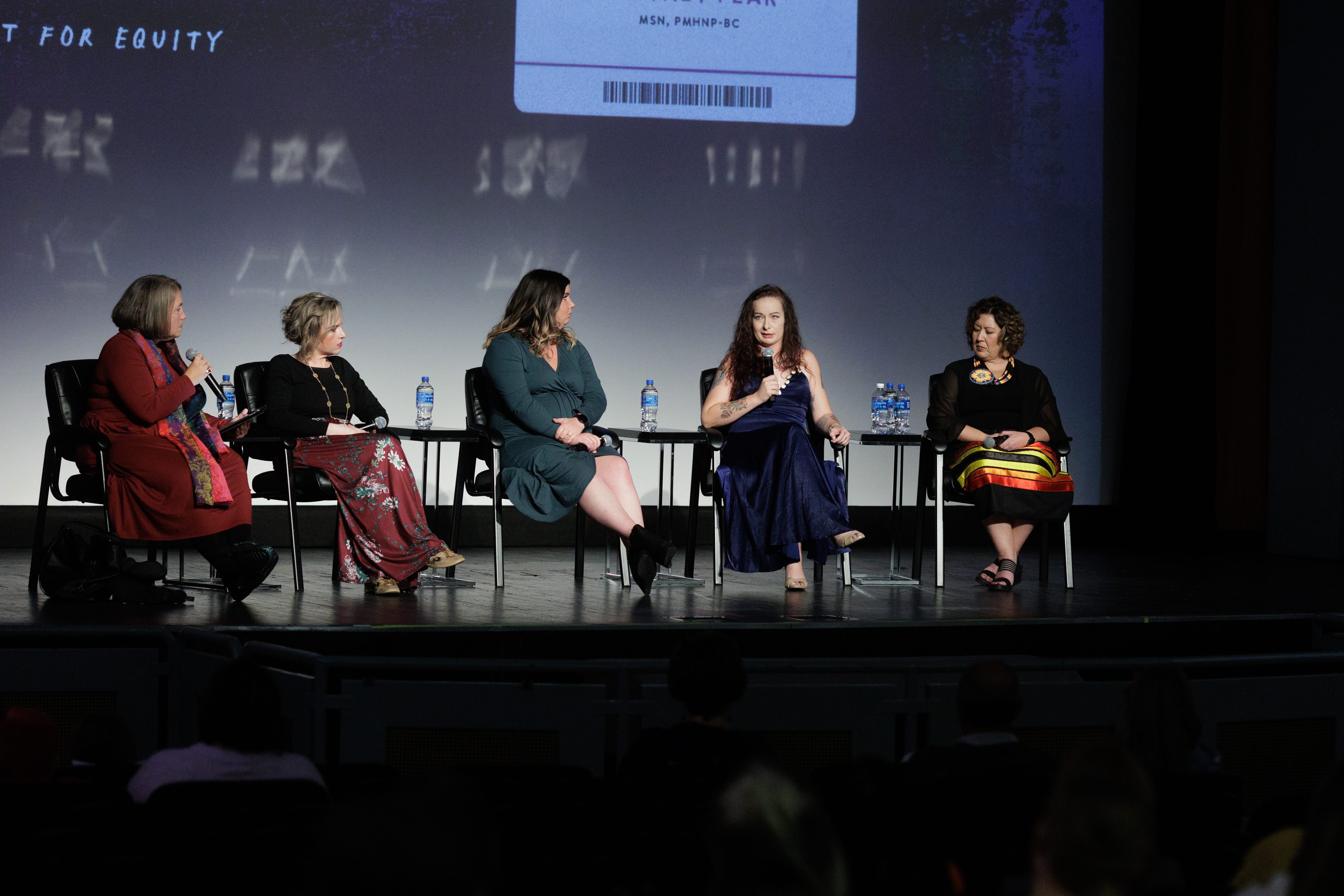
Last month, we brought many of those people together for a “Nurse’s Night at the Movies” in Fargo. The event took place one year after we started filming, and it gave me a chance to reflect on all the people this film has touched — not just through the more than 300,000 views on YouTube, but the local clinicians and patients whose stories were told alongside Whitney’s. On the big night in Fargo, it was those folks and Whitney who were the stars.
Is it too much to imagine that every nurse has a similar community of people whose experiences could be honored if their story was fully told? I don’t think so. That’s why we’ll keep telling these fully realized stories of nurses through films, podcasts, social media, and many other means. You can help by telling us what stories most resonate with you and your nursing practice.

Ways to Say Yes
Every time I watch “Who Cares,” I am struck by the fact that every day, nurses are in a position to say “yes” or “no” to health equity. In the film, we meet patients who are currently receiving treatment because Whitney Fear and her team said “yes” to them, seeing them as complete human beings and not just a checklist of social determinants of health.
For the film’s release, we decided to create additional resources that would help more practitioners say “yes” to every patient they encounter. The resource pages include not just background information on each issue, but discussion questions and further reading. Click on the links below to visit SHIFT Nursing and learn more:
Hiding in Plain Sight: How Nurses Can Stop Human Trafficking
What Led to Health Disparities on the Pine Ridge Reservation
How Burnout Impacts Nursing: Before, During, and After COVID-19
‘A Mental Health Care Desert’: Disparities in North Dakota’s Mental Health Resources
How Nurses Can Treat Substance Use with Trauma-Informed Care
For those who want to hear more from Whitney and other nurses working on these issues, please check out her original SHIFT podcast episode and a version of the film that includes a panel discussion.

Making Ourselves Heard
We’ve known since the first Woodhull Study in 1998 that nurses are underrepresented in media stories about health care. A follow-up study twenty years later confirmed a similar gap. Unfortunately, things haven’t gotten much better since then, despite the difference nurses’ voices could make on issues like vaccination and health disparities. One reason we made “Who Cares” was to see if we could use a compelling narrative to break through the noise in a new way.
So far, we’re pleased by the results. Our live event in Fargo led to radio and television coverage of Whitney, her clinic, and the issues she champions. A feature in the Forum of Fargo-Moorhead chronicles Whitney’s nursing journey. The author also links her story to some of the structural inequalities that lead to a lack of representation in nursing — just 0.8 percent of nurses are American Indian or Alaska Native.
But as Whitney explains, she was drawn to psychiatric nursing, because her own experiences had taught her “the power of truly listening to people.” We hope her story leads journalists to seek out many others like her.
More Stories on the Screen
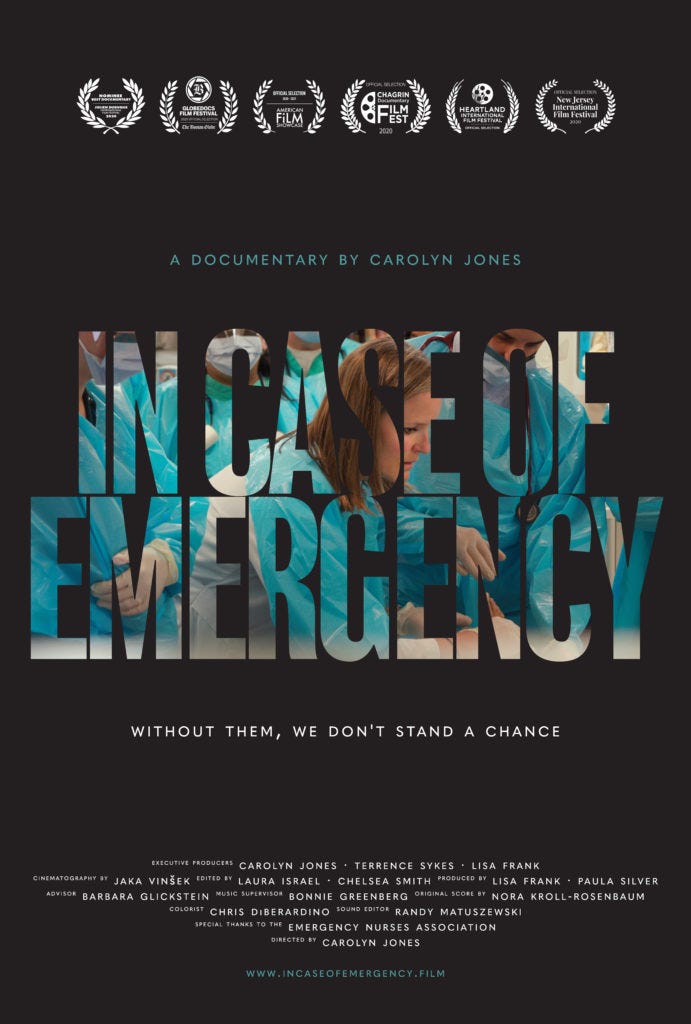
We’re not the only ones looking at the power of film to tell nurses’ stories and highlight issues in new ways. Last year, In Case of Emergency won the “Best Documentary” prize at the United Nations Association Film Festival, plus several other honors. Carolyn Jones made the film to highlight the story of frontline nurses across the country at the height of the pandemic. Her team even partnered with the Emergency Nurses Association to break out video vignettes from the film for continuing education, providing firsthand insights into issues like gun violence, opioid addiction, and behavioral health.
Jacob Molyneux, senior editor of the American Journal of Nursing, described several poignant moments from the documentary:
“…despite the issues raised by this film, the sheer vitality of the individual nurses leaves a hopeful impression. In one poignant scene, a nurse sings a country song to a developmentally impaired man to calm his fear of needles. In another, a nurse recalls why she became a nurse. Describing time spent in the hospital as a child, she says, ‘The feeling that I had when the nurses took care of me, that is what I wanted to do with my life.’”
We have also been inspired by Jones’s previous nurse documentaries as well as Denetra Hampton’s film The Black Angels, which tells the story of Seaview Hospital, where Black nurses took care of thousands of tuberculosis patients other nurses wouldn’t touch.
Want to add your voice to the conversation? Reply to this e-mail and let us know what you think. Or if you haven’t already, subscribe for free to hear more about what we are learning from the voices of frontline nurses.